
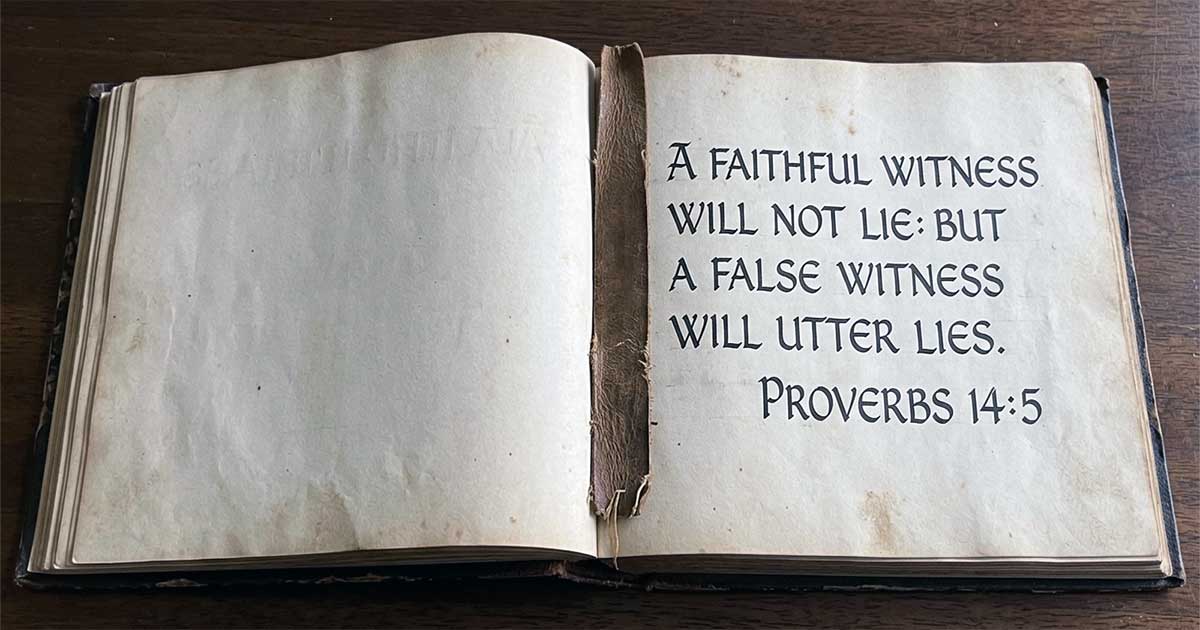
When Life is Surrounded by Lies Without Love. Prov 14:5
A Faithful Witness: Why Truth Still Matters
We live in a world where truth often feels negotiable. Half-truths, exaggerations, and misinformation seem to be everywhere. Yet Scripture places an incredible value on honesty, reminding us that our words have the power to build trust—or destroy it.
The book of Proverbs speaks often about truthfulness, and one recurring theme is the importance of being a faithful witness. While this certainly applies to giving testimony in a courtroom, it also reaches far beyond legal settings. Every day, we serve as witnesses through what we say, how we represent others, and whether our words reflect the truth.
Being a faithful witness isn’t simply about avoiding lies. It’s about living with integrity so that others know they can trust what we say.
What Does It Mean to Be a Faithful Witness?
A faithful witness is someone who is committed to telling the truth, even when it’s difficult.
That kind of person values honesty over convenience. They don’t twist facts to make themselves look better or leave out important details to protect their own interests. Instead, they speak with clarity, accuracy, and fairness.
Trust is built on this kind of consistency. Whether in friendships, families, workplaces, or churches, people naturally rely on those whose words match reality. When someone has a reputation for honesty, others know they can depend on them.
Scripture reminds us that truthfulness isn’t just a good habit—it’s a reflection of godly character. Choosing honesty demonstrates integrity and shows respect for both God and the people around us.
The Damage Caused by False Witnesses
If faithful witnesses build trust, false witnesses tear it down.
Throughout history, countless people have suffered because someone chose to lie. False testimony has led to wrongful convictions, damaged reputations, broken relationships, and lasting emotional pain. Even when the truth eventually comes to light, the scars left behind can remain for years.
But false witnessing isn’t limited to a courtroom.
It can happen whenever we spread gossip without knowing the facts. It happens when we repeat rumors, misrepresent someone’s motives, exaggerate a story, or unfairly accuse someone. Sometimes these actions aren’t even intentional. We “simply” pass along information without stopping to verify whether it’s true.
The consequences can be devastating.
A person’s reputation can be destroyed in a matter of minutes, while rebuilding trust may take years. Families, churches, workplaces, and communities all suffer when dishonesty becomes commonplace.
Trust is difficult to earn but surprisingly easy to lose.
Truth Is a Moral Responsibility
Honesty isn’t just about following rules; it’s about reflecting God’s character.
Throughout Scripture, truth is consistently connected with justice, wisdom, and righteousness. When we choose to tell the truth, we’re helping create an environment where trust can flourish, and justice can prevail.
Lies, on the other hand, rarely remain isolated. One deception often leads to another, creating confusion, suspicion, and broken relationships. Whether in a courtroom, a workplace, or a family dinner table, dishonesty affects everyone involved.
There’s also a personal cost to deception. Carrying a lie often creates guilt, anxiety, and the constant pressure of trying to maintain a false narrative. Living truthfully brings a different kind of freedom—the peace that comes from knowing we have nothing to hide.
Integrity isn’t always easy, but it’s always worth pursuing.
Building a Culture of Honesty
Creating a culture of honesty begins with individual choices.
It starts by speaking carefully, refusing to spread rumors, admitting mistakes, and correcting misinformation when we discover it. These small decisions may seem insignificant in the moment, but together they create relationships built on trust instead of suspicion.
Honesty also grows where accountability exists. Families, churches, and workplaces become healthier when people know they can speak openly, own their failures, and be treated with both grace and truth.
Leadership plays an important role here as well. When leaders consistently demonstrate integrity, they set the tone for everyone around them. People are far more likely to value honesty when they regularly see it modeled.
Ultimately, each of us has the opportunity to be a faithful witness; not only by telling the truth but by living lives marked by integrity. In a culture where truth is often compromised, choosing honesty becomes a powerful testimony.
Our words matter. They can encourage or discourage, heal or wound, build trust or destroy it. May we be people whose speech reflects the truth, whose character inspires confidence, and whose lives point others toward the God of truth.


Leave a Reply