
What Does the Bible Say About Wise Counsel?
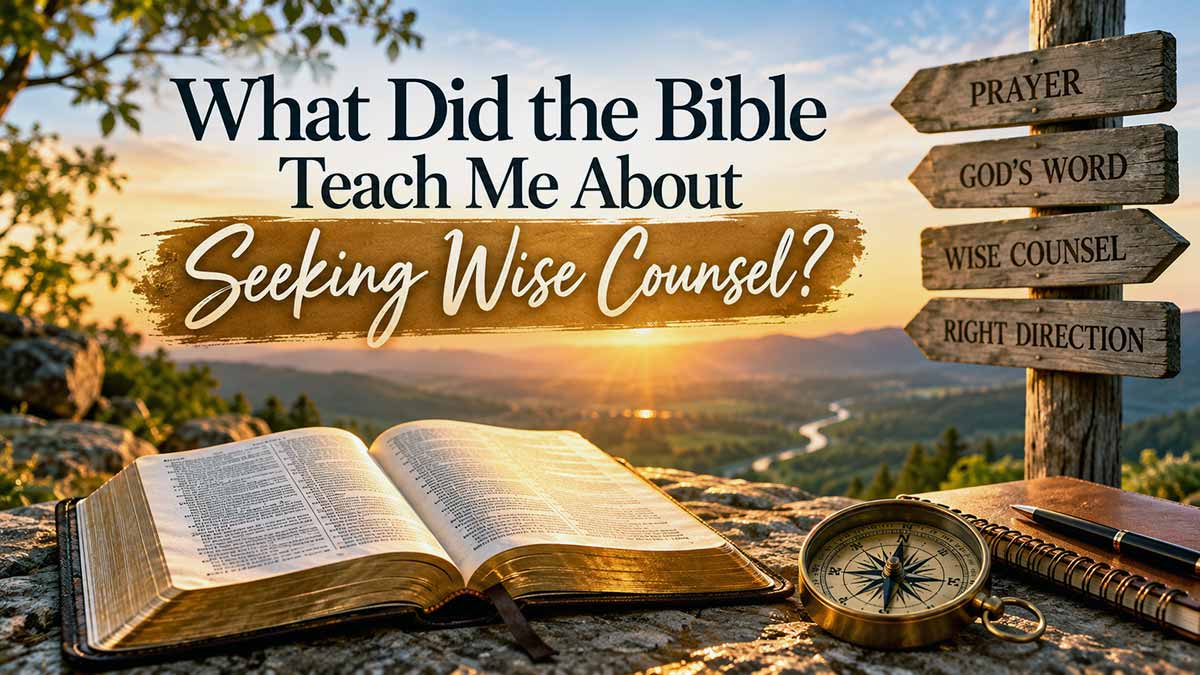
What Did the Bible Teach Me About Seeking Wise Counsel?
We all make plans.
We make plans for our families, careers, finances, relationships, and future. We think about where we want to go, what we want to accomplish, and what we believe will make our lives better.
There is nothing wrong with making plans. But the Word of God has taught me something important: I shouldn’t rely only on my own understanding when making them.
Sometimes what looks like the right decision to us may not be the right decision at all. We don’t always see what is ahead, and we don’t always recognize the consequences our choices may bring.
That is one reason God teaches us to seek wise counsel.
What Does the Bible Say About Wise Counsel?
Proverbs 20:18 NKJV says:
“Plans are established by counsel; By wise counsel wage war.”
This verse taught me that important decisions shouldn’t always be made alone.
There is wisdom in listening to people who can see something we may be missing. A trusted friend, family member, pastor, mentor, or someone with experience may be able to offer a perspective we haven’t considered.
But I have also learned that not all counsel is wise counsel.
As Christians, the advice we receive should ultimately be measured against the Word of God. Someone may sincerely believe they are giving us good advice, but if that advice leads us away from God’s truth, it isn’t the kind of wisdom we should follow.
God’s Word must remain our foundation.
Why Do We Need Wise Counsel?
Sometimes we become so focused on what we want that we only see the outcome we hope for.
We may think:
This is what I want.
This will make my life better.
This has to be the right decision.
But emotions can influence our judgment. Fear can influence us. Pride can influence us. Even excitement can cause us to move too quickly.
Wise counsel can cause us to slow down and ask questions we haven’t considered.
Have I prayed about this?
Does this decision agree with God’s Word?
What could the consequences be?
Am I being led by wisdom or simply by what I want right now?
Those can be difficult questions, but sometimes difficult questions protect us from difficult consequences.
Wise Counsel Can Help Us See What We Cannot See
One of the greatest benefits of seeking counsel is gaining another perspective.
Someone with experience may recognize a warning sign we overlooked. Someone who knows us well may recognize when our emotions are affecting our judgment. A spiritually mature believer may remind us of Scripture when we have become too focused on our circumstances.
Proverbs 12:15 says:
“The way of a fool is right in his own eyes, But he who heeds counsel is wise.”
That verse reminds me of something simple but important:
Just because something seems right to me doesn’t necessarily mean it is right.
Sometimes we need someone willing to tell us the truth rather than simply tell us what we want to hear.
Choosing the Right People to Listen To
Seeking counsel doesn’t mean asking everyone what they think.
Too many opinions can create even more confusion.
Instead, I believe we should carefully consider who we allow to speak into our lives.
Are they trustworthy?
Do they demonstrate wisdom in their own life?
Do they care about what is best for us?
Most importantly, does their advice agree with God’s Word?
The Bible gives us another important warning in Proverbs 14:12:
“There is a way that seems right to a man, But its end is the way of death.”
That is a powerful reminder that something can feel right and still lead us in the wrong direction.
This is why prayer, Scripture, and godly counsel belong together.
What If the Counsel Isn’t What I Want to Hear?
This may be one of the hardest parts.
Sometimes we seek advice hoping someone will confirm what we have already decided.
But wise counsel may challenge us.
Someone may tell us to wait when we want to move forward. They may point out a danger we don’t want to acknowledge. They may remind us of a biblical principle that conflicts with what we want.
That doesn’t automatically mean they are right. We should still pray, examine Scripture, and seek God’s direction.
But we should be humble enough to listen.
Sometimes the advice we least want to hear is exactly what we need to consider.
What Did I Learn About Making Plans?
I’ve learned that making plans is not just about asking, “What do I want to do?”
A better question is:
“Lord, what do You want me to do?”
We can make plans, research our options, seek experienced people, and carefully consider the consequences. But ultimately, our confidence should not rest in our own ability to figure everything out.
It should rest in God.
Proverbs 3:5–6 tells us:
“Trust in the LORD with all your heart, And lean not on your own understanding; In all your ways acknowledge Him, And He shall direct your paths.”
That is the kind of counsel I want guiding my life.
We may not always know where a decision will lead, but God sees what we cannot see.
So before making an important decision, I have learned to slow down, pray, search God’s Word, and listen to wise counsel.
Make your plans—but invite God into them.
Because sometimes the wisest decision we can make is admitting that we don’t have all the answers and asking God to show us the way.


Leave a Reply